10 Hidden but Common Fears in Elders That Quietly Damage Emotional Health and How You Can Overcome Them
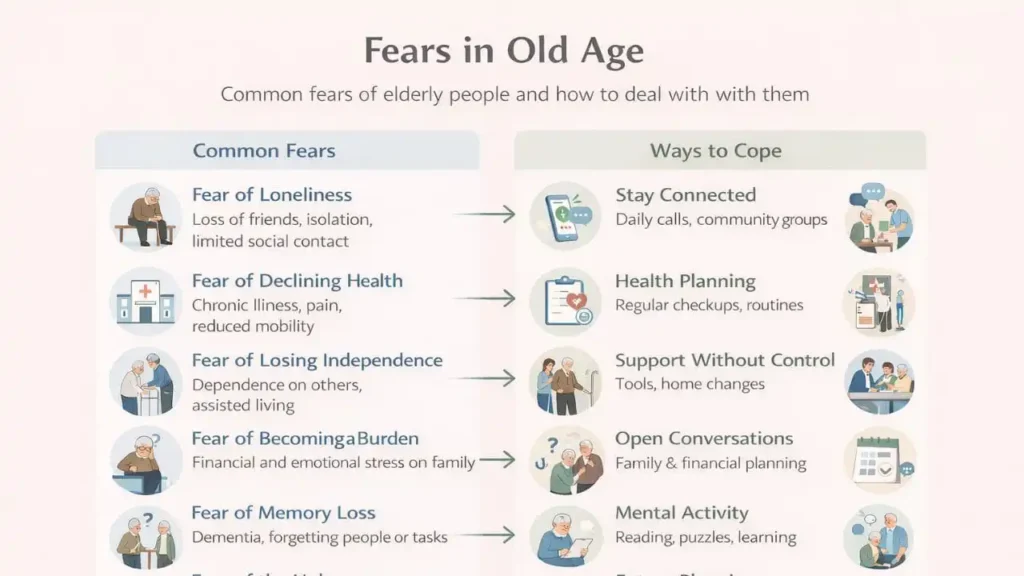
Today I want to talk about common fears in Elders because these fears not only affect your moods; in fact, they have a great impact on your daily tasks, choices, and overall well-being. As you age, there are many changes and unknown fears that come up, and you may try to solve them on your own. These fears of elderly people don’t come with weakness but from change. The changes that happen in the human body as people age are really frightening.
I understand that problems caused by aging are not only limited to physical changes; emotional worries are more serious and usually neglected, and you have become tired of handling them on your own.
You may worry about being dependent on others, financially or physically; loss of control over your body or everyday life, the fear of not being understood by people around you; and even the fear of death traps you.
Elderly people often experience these fears, and it’s okay to feel that way because you are going through major changes in life. I want you to know that you are not alone, and your concerns are manageable. If you know what you’re feeling and how to deal with it, you will be able to age with grace, comfort, and courage. You will gain the confidence to talk about what you feel, ask for help, and find the solutions on your own.
Table of Contents
Common Fears in Elders and How You Can Deal With Them
Fear of Losing Independence or Control
You may have developed a fear of loss of independence more than the fear of illness. I have witnessed how fears in old age take control of the minds of elderly people and how it affects their everyday life. You have done everything in your own way your whole life; now, seeking help for basic tasks makes you feel like you are losing control or independence.
According to research in the field of gerontology, fear of dependence often leads to anxiety or disappointment and makes the person less satisfied with life. You might choose not to ask for assistance even when it supports your capability, just because you are being fearful.
Based on my observation, I want to suggest a different approach. You need to protect functionality rather than striving for perfection. You can still continue to make your life decisions while relying on tools, set up clear rules, and take slight help.
Studies on healthy aging indicate that planned rest and healthy lifestyle choices encourage long-term independence and reduce the fears of elderly people. You can use supports like handrails, wear protective footwear, or divide up the job throughout the day. These behaviors reduce pressure and build confidence.
Fear of Declining Health or Illness
I understand that poor health often triggers emotional anxieties, especially the fear that comes with it. In addition to physical changes, many elderly people show their concerns about losing control over their bodies or not being able to handle their daily activities.
Research shows that 93% of those 65 and older suffer from at least one chronic condition, such as arthritis or heart disease. Mostly, elders refuse to take help in order to manage their fear of inability, which results in loneliness and mental fatigue.
You may feel anxious to seek help or to disturb your loved ones. That’s normal, but it’s critical to have open conversations about potential healthcare needs. Little adjustments like scheduling regular checkups or arranging support bars can reduce the emotional impact of uncertainty. When you face these fears bravely, you and your loved ones will feel more secure and in control.
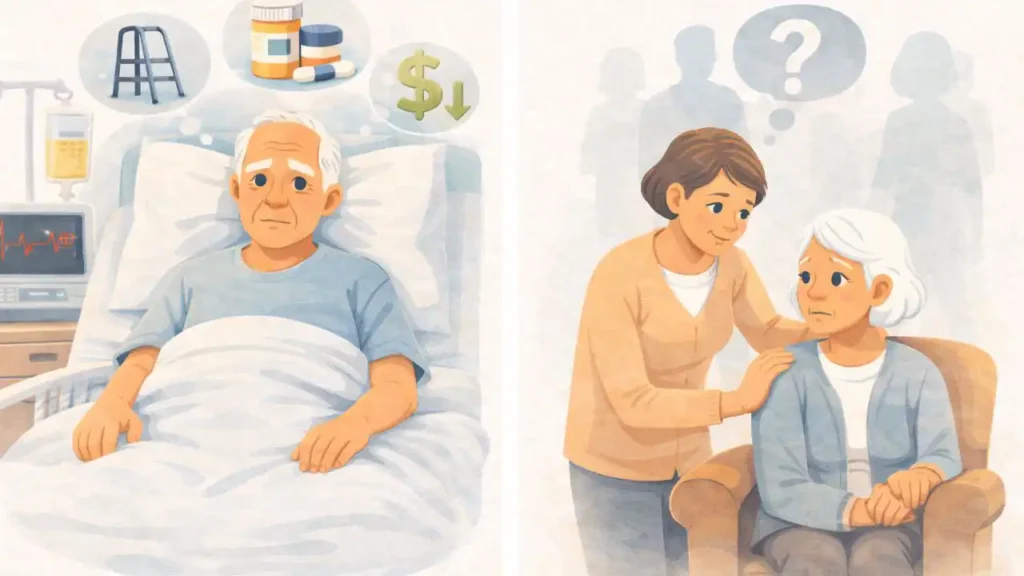
Fear of Death
The fears of old age might become more intense as you become older, particularly the fear of death. According to research, 70% of seniors fear dying, but this topic is hardly discussed because the people around us usually avoid to discuss it. Many elderly people doubt whether their feelings are appropriate or not because society often discourages to talk about death.
It’s very important for you to discuss these anxieties openly. Addressing your fear of death won’t make it more fearful rather, it will help you understand and manage these emotions. Sharing your thoughts with your family or in support groups can be a source of peace and comfort for you.
The only way to manage your fears in old age is to confront them; otherwise, they will become more intense and will take control of your mind, leaving you in a miserable state of mind. To control your fear of death, you have to discuss it openly without hesitation. To live in your present and enjoy this new phase of life peacefully, you have to face your unspoken fears.
Fear of Loneliness and Social Isolation
One of the fears of elderly people is being alone because when you age, your social circle gets smaller. Research shows that one in every three seniors reports the fear of loneliness, and some factors, like retirement, illnesses, and loss of a loved one, might trigger this fear.
According to the National Institute on Aging, loneliness increases the risk of both physical and mental illnesses, like depression and high blood pressure.
In order to deal with your fears in old age, you should make small, consistent efforts to stay socially connected. Feelings of loneliness can be eased by making regular calls to friends and family, taking part in social activities, or joining community-based programs.
Social connections could be enhanced by even small but meaningful interactions. By developing a sense of community and joining people of your age and sharing each other’s concerns, going out on walks with them, and establishing contacts on a regular basis, you can improve your general health and well-being.
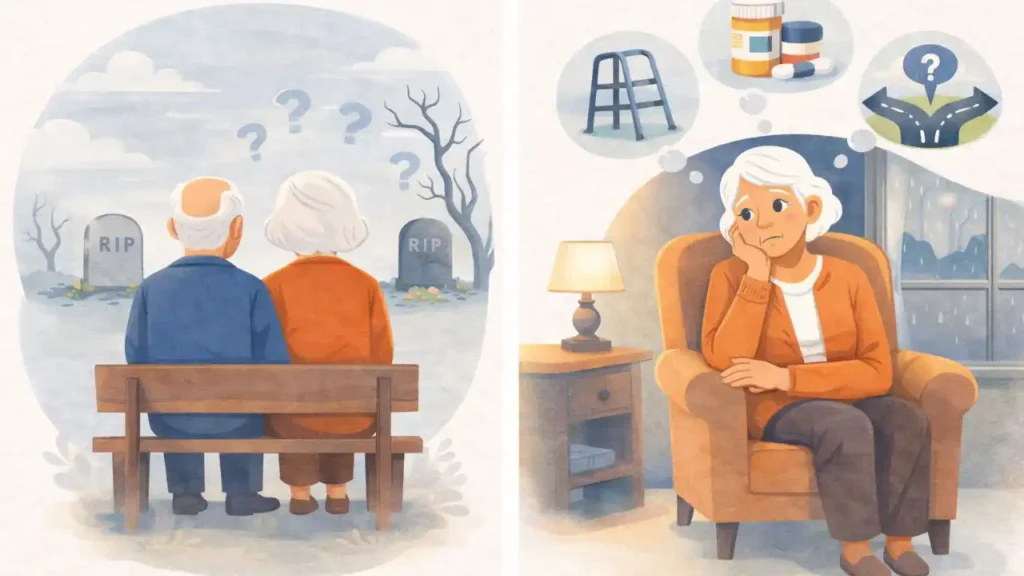
Fear of Becoming a Burden
Elderly people often have a fear of burdening their family. As you age, your health declines gradually, as a result of which you may become dependent on your family physically, financially, or even emotionally. This thought may scare you, but you are not alone. Eighty percent of older people worry about being a burden, which increases their stress and anxiety.
Don’t let the fears in old age control your life. It’s natural to feel uneasy because a lot of things change around you or within your own self, as you age. Take your time and observe these changes. Instead of letting your fears rule your life, take active steps to deal with them.
Discuss your future needs directly with your family and financial professionals. You can maintain your self-reliance and ease the burden on loved ones by making healthcare and financial decisions ahead of time. By addressing these fears early, you can reduce the anxiety and be able to face the process of aging with confidence and peace.
Fear of Financial Insecurity
One of the fears faced by elders is running out of money, even if you have saved carefully throughout your life. The fear of not having enough money for yourself or its impacts on your family may stress you out. The National Council on Aging reports that 80% of seniors are concerned about running out of money when they retire.
Talking about finances may be uncomfortable for you, but addressing your concerns openly can release your tension. Start with the basic necessities of life like food, housing, and utility bills, and then go on to long-term goals. Creating an accurate spending plan can help you to maintain your financial security. Don’t forget to put aside some money for unexpected expenses such as medical emergencies.
Your financial anxiety will decrease if you plan in advance, and you will also feel more confident in the future.
Fear of Technological Isolation
As technology advances, many seniors worry about being left behind. Particularly when they find it difficult to learn about smart gadgets, social media, or online services, the fear of technological isolation is common. among elders. The elderly may feel isolated as family members contact more and more via digital channels. 40% of seniors say they find technology difficult, and many feel excluded, according to the Pew Research Center.
Easy-to-use gadgets can help you ease your fear of technological isolation. Start with simple gadgets that support text messaging and video calls, such as smartphones or tablets. Learn about how to use basic functionalities step-by-step.
Look for the ways to use tech to your best way; for this, you can join online communities or social media platforms that allow you to communicate with family members, friends, or your age fellows; this way, you will be able to build connections with your age fellows or individuals going through the same phase of life.
This will help you overcome your fear of technology and will give you the self-assurance to interact with the digital world. These resources will enhance your social life and lessen your feelings of loneliness.
Learn more about how technology can provide you with solutions for day-to-day activities as an older adult.
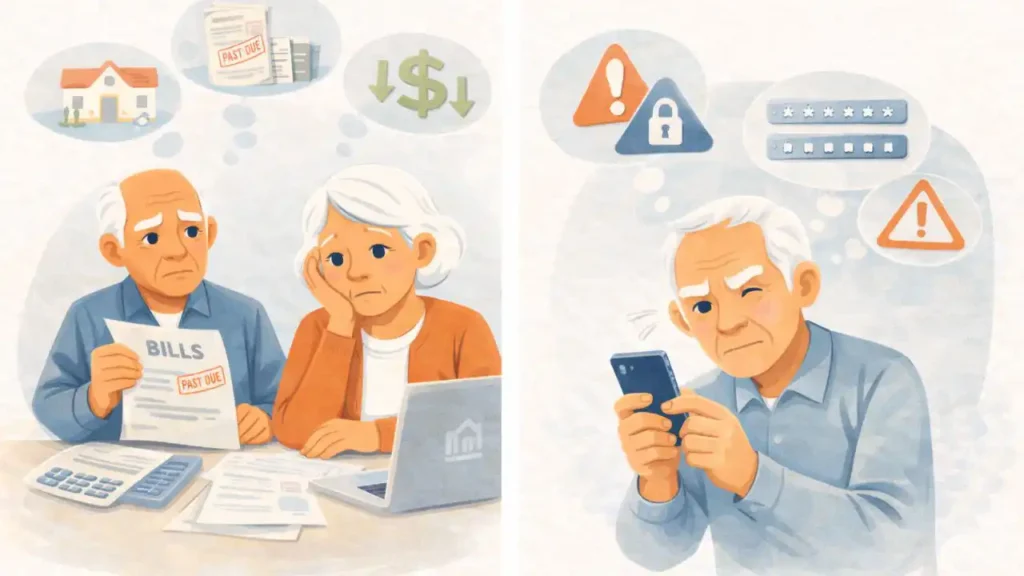
Fear of Losing Identity
Many people worry about losing their identity as they get older. Many of you have built your identities through the years with careers, passions, and relationships. Now you may start to doubt your identity and purpose due to retirement, physical limitations, or changes in interpersonal relationships. This concern is actually more about being disconnected from the outside world as well as loss of your freedom.
You can handle it by getting involved in social activities , take up new hobbies, or pick up a new skill. To maintain a sense of purpose in life, you can continue to participate in useful pursuits.
Fear of the Unknown
I understand that the fear of the unknown is one of the common fears in old age. Uncertainty about the future may cause anxiety as you age. Any change in lifestyles, physical wellness, or flexibility, many older people are afraid of what is ahead in life. Uncertainty about the future can raise your stress levels and have a great impact on your mental health.
Make plans for the future ahead of time to deal with this concern. Talk to your family about your needs and secure your financial stability, or take the needed measures for your healthcare. A strategy in place will make your life feel less unpredictable and more in check by reducing worry about the unknown.
Fear of Declining Mental Sharpness
You may be worried about the decline in mental sharpness as you get old. I personally know the individuals for whom the fear of memory loss or cognitive decline was worse than their concern about physical limits. Just like you, a lot of individuals are concerned about dementia or Alzheimer’s and how it can affect their daily life, career, or relationships.
Engaging in brain-boosting activities can help you reduce these fears in old age. If you want to be active and keep your mind sharp, try puzzles, physical workouts, or reading books, or you can learn a new skill. It has been proven that regular physical activity, such as walk or lightweight exercise, promotes brain function.
Cognitive functions can be boosted by eating a diet high in fruits, vegetables, and healthy fats. You can feel more confident and maintain mental clarity as you age by following these simple actions.
CONCLUSION
The Common Fears in Elders are real, widely accepted, and backed by research. You’re not alone if you have fears in old age. You can still work on your fears by practicing useful strategies, and their impacts can also be decreased. Understanding fears involves addressing them openly with preparation, clarity, confidence and support instead of giving in to them.
I encourage you to look into these options, start work on them, and take one small step at a time. Real transformation begins when you accept your fear, understand its causes, and take responsible steps every day.
Is fear of death normal in older adults?
In old age, fear of dying is common and normal. Research shows that as health changes, many older adults consider death more. Fear can be reduced, and psychological well-being can be improved through honest discussion and emotional support from family or friends.
How does declining health increase fear in elderly people?
Health decline increases the stress levels of the elderly because it creates uncertainty. Chronic disease affects everyday life and raises concerns about medical treatment in the future. Early conversations and clear medical suggestions reduce anxiety and uncertainty.
Can fears in old age affect mental health?
Yes, worries may increase feelings of sadness, stress, and isolation throughout the ages. Unprocessed fear has a direct link to poor mental health. Communication, healthy routine, and support are all helpful to control these negative effects.
Why do seniors fear technology?
One of the fears associated with aging is the fear of technology because of its rapid advancements. A lot of seniors feel anxious about making errors or being perceived as dumb. Clear instructions and regular practice can encourage seniors to adopt technology and build confidence.
Are fears in old age preventable?
While fears may not completely go away in old age, they can be reduced with proper strategy, communication, and support. Elderly people might feel safe and emotionally secure with attention and care.