Adult Children Blame Parents for Childhood: 8 Painful Truths Every Parent Needs to Understand
“Adult children blame parents not only for real past events but also because stress and unresolved emotions may bring back their old wounds, and blaming parents is a psychological shortcut to express that pain and protect oneself from being exposed. But if both sides make an effort to understand one another, this can be handled.”
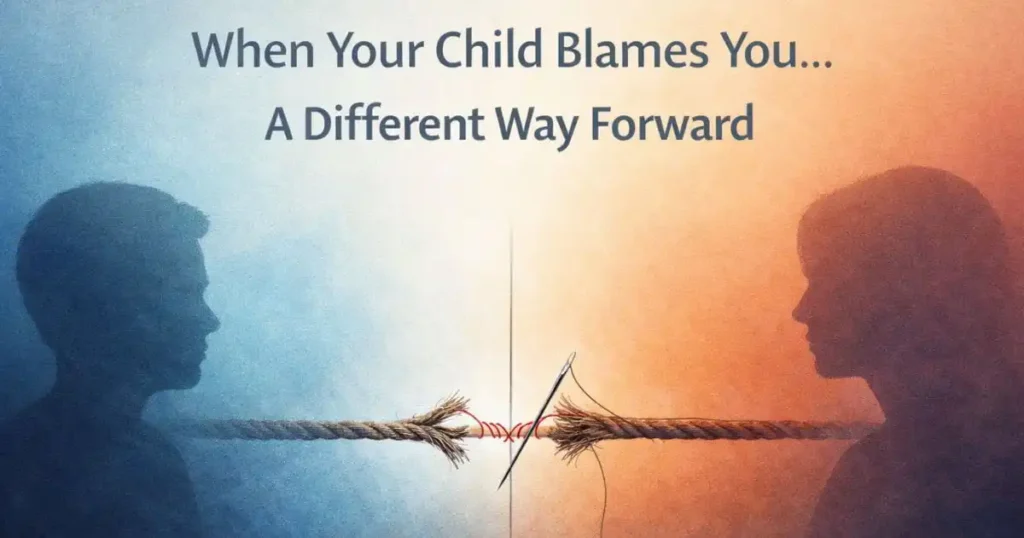
Table of Contents*
If tears ever rolled down your cheeks because your adult child blames you for not doing enough or reminds you of your mistakes that you have never made intentionally, then you are not alone. I have talked to parents who are going through the same pain and question themselves, asking, “What’s my fault?”
I know you have done a lot for your children, sometimes even more than what’s in your capacity, and only you are the one who knows this struggle. But their words shatter you and your identity as a parent. It’s natural that you become defensive to fix the issue, and this is exactly where most parents get stuck and are unable to find a way out.
When adult children blame parents, it’s not always a judgment; mostly, it is an expression of their unmet needs, unresolved or suppressed emotions, and the deep human struggle to make sense of life. It reveals their inner struggles more than it defines you as a parent.
What Does It Really Mean When an Adult Child Blames Their Parents?
When an adult child struggles in life, be it with their career, relationships, or responsibilities, or even with their own identity, and they fail to find the solution, then they start to look into their past to find answers, and this is where they start to blame you.
Some paternal actions actually matter and need to be acknowledged, but your child may use blaming as their way to avoid facing their inner chaos or confusion directly.
It’s important for you to understand the difference between real and unjustified blame. Without immediately taking complete responsibility for your children’s struggles, you must learn to acknowledge their emotions as a parent.
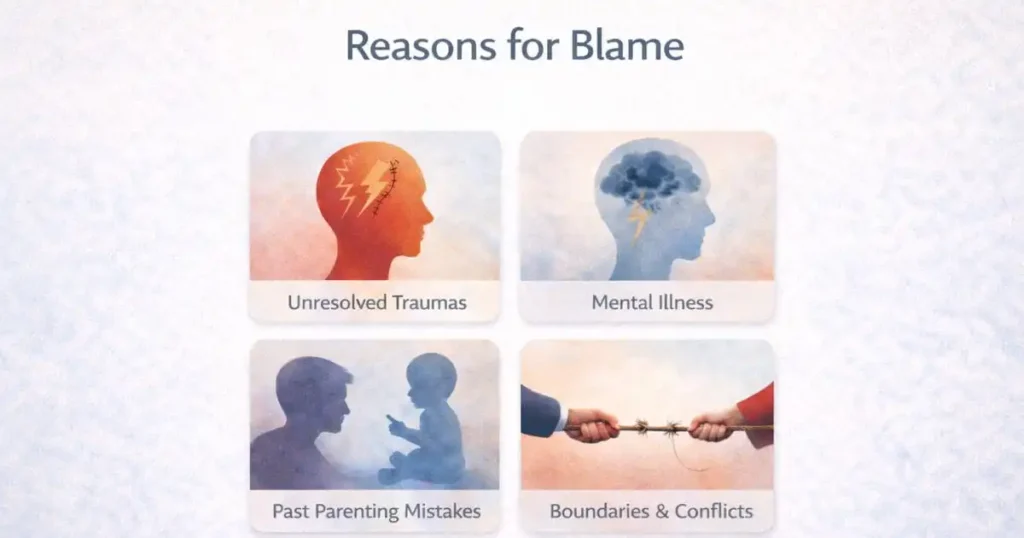
For what reasons do adult children blame parents
Here I am mentioning some common reasons for adult child blame that I got to discover while working with my clients.
When Life Pain Becomes Parental Blame
When children feel their struggles are because their parents have not raised them well or have not done enough for them, they start projecting it onto their parents.
Parents’ Response: Don’t try to explain things; just make them realize that you are still there for them. You can tell them, “I know life feels really difficult for you, but I really care for you. Tell me what I can do to support you at this point.”
Why It Works: This will shift their focus from the past to the present.
Research shows that adult children, when they feel overwhelmed with life struggles, may blame their parents, thinking they are not capable enough because their parents didn’t raise them well.
They Served as your Emotional Punching Bag In Childhood
Adult children blame parents because they felt like they had to absorb your stress, anger, or emotional outbursts in childhood.
Parents’ Response: Parents should honestly acknowledge their child’s load instead of being defensive and minimizing it. To comfort your child, you can say, “You didn’t deserve to endure my feelings in that way, and I honestly apologize.”
Why it works: Children will feel validated when parents acknowledge the emotional burden they carried, they will feel at ease, and they will be less likely to keep placing blame.
They were fed up hearing “I did my best.”
Because hearing “I did my best” can make your children feel as though their suffering is being minimized rather than understood.
Parents’ Response: Parents can take action by acknowledging their experience rather than justifying or defending your intentions. You can reassure your child by saying, “I know my best still hurts you; let’s talk about it.”
Why it works: Validation from parents makes children feel emotionally satisfied, but repeated self-justification may leave your children frustrated.
They Felt Exhausted by Your Victim Mentality
When you react with helplessness or self-pity, your adult child may blame you because they feel they are being forced to console you rather than have their own suffering validated.
Parent’s response: Remain emotionally responsible without falling into victimhood or guilt. You can soothe them with phrases like, “This time, I’m not going to make this about me; I want to hear what you needed and didn’t get.”
Why It Works: When parents show responsibility towards their behavior, the child feels safe, while victimhood only fuels resentment in children, which in the worst cases becomes a reason for adult child estrangement.
They were instructed to “respect” rather than being heard
If you continually ask for respect as a parent, without caring for your children’s emotions. They will feel like you have prioritized your authority over your child’s needs.
Parents’ response: Promote mutual respect instead of demanding obedience. You can comfort them by saying, “I don’t want respect to silence you; let’s try to understand each other.”
Why it works: Mutual respect promotes healthier relationships between adults and reduces conflict.
When Parents’ Financial “Help” Comes With Control
Your child may blame you because your financial support was more about control than help.
Parents’ response: Parents should try to realize how expectations can make support feel oppressive. I have personally witnessed this type of control in many parent-child relations; sometimes the control was conscious, and sometimes it was unconscious, but you can console your child if you try to understand the underlying pattern, or you can tell them, “I apologize if my attempt to assist came across as control.”
Why it works: Trust can be restored by recognizing the hidden cost of “support.”
When Repeated Broken Promises Damaged Trust
Your adult child may hold you accountable because they have a repeated list of unmet promises that have now created a deep sense of disappointment and emotional mistrust over time.
Parents’ Response: Don’t try to justify here; it won’t work. You should accept the consequences of inconsistency. You can simply say to them, “I regret the hurt those broken promises caused, and I understand why they stayed with you.”
Why it Works: More than explanations or defenses, sincere accountability aids in regaining trust.
They Felt You Never Truly Apologies
If a parent tries to avoid a real apology, then the child may feel like their pain was never taken seriously.
Parents’ Response: Offer them a sincere apology that focuses on their experience or the hurt they feel, not on your intentions. You can show them your concern by saying, “I’m truly sorry for how that affected you, and I should have acknowledged your pain sooner.”
Why it works: A true apology can release their resentment and will also give them a sense of acknowledgment.
How Should Parents Understand—Not Just Defend?
It’s natural when you try to defend yourself and explain your side when your adult child blames you. But blame is not a request for facts; rather, it is an expression of unresolved hurt or unmet desires.
If you try to understand your child, that doesn’t mean you were wrong or that you are accepting false blame on yourself. What it means is you are making an effort to hear the emotions underneath their words.
What I have personally witnessed is that many adult children are not looking for arguments or conflicts, but what they truly want is acknowledgment, safety, and space to feel what was never processed.
When parents stay calm, listen with humility, and respond without being defensive, the relationship has a better chance to recover or heal over time.
How Parents Can Repair Their Relationship with Their Adult Children
If you truly want to repair your relationship with your adult child, then you have to be patient; it doesn’t come with quick fixes. You can calm them by acknowledging their pain, but to recover or to build that trust again will take real effort and time.
As a parent, you can rebuild a connection if you shift your focus from being right to being present. Listen and try to understand their narrative without being defensive, and respecting your child’s adult boundaries is a key that you must take care of.
You have to make consistent efforts to make them realize that your actions are about care, not control, this time. Even small moments of empathy count, as this will give your child a sense of safety and being heard.
Conclusion
When an adult child blame parents, it can be devastating and hurt deeply. But we must understand that blame is usually the surface-level expression of unresolved hurt and unfulfilled needs or emotions that were never processed. While some blame may hold truth and cause real damage, constant blaming shows some serious internal struggles that your child is going through; it’s not just a judgment of you now.
Being a parent, your goal should not be to win the argument or erase the past, but to move your focus towards deeper understanding, accountability, and emotional presence. Instead of reacting, when you respond with calmness, you will create a space for healing for both you and your child.
People also ask for
Why do adult children blame parents for mistakes during their childhood?
Adult children blame parents for their childhood because unresolved pain resurfaces in adulthood, especially when a person is going through life hurdles; then, blame becomes a way to explain current struggles and seek validation. This way, your child may try to simplify their complex emotions.
What is adult child syndrome?
Adults who continue to display emotions they carry from their disturbed or traumatic childhood, such as fear, people-pleasing, anger, or trouble trusting others, are said to have adult child syndrome. Even though they appear strong from the outside, these people struggle with relationships, boundaries, or self-worth because their early emotional needs were not fulfilled.
How to deal with a resentful adult child?
You have to be patient to deal with a resentful adult child. Do not argue about the past, acknowledge their emotions and listen without being defensive. Stay calm, establish polite boundaries, and, where needed, offer accountability. When adult children feel heard instead of rejected or corrected, resentment frequently reduces.
When should you walk away from an adult child with mental illness?
When a relationship with an adult child who has a mental illness becomes risky, abusive, or continuously disruptive to your well-being, you may need to distance yourself from them. Walking away means setting boundaries while encouraging expert help, not leaving them.
How to deal with adult children who blame you?
To deal with an adult child who blames you, you have to be calm and understanding without being defensive or reactive. Acknowledge their emotions or the damage they have been through without talking about the blame, and you must set clear boundaries with them. Your respectful response will reduce the conflict and keep the door open for better communication